The Knowledge Hub
Better Start, through the Centre for Early Child Development, has generated local research and evidence around what works to support early childhoods over the past 12 years.
The Centre for Early Child Development brings together experts, professionals, and parents to guide the strategic direction and delivery of early years transformation in Blackpool. The Centre holds the vision and ensures local decision making is driven by and based on the latest science, evidence, practice, and learning. Better Start is now amplifying that learning and ensuring it is put into practice across the UK.
Learn more about building effective systems that enable meaningful change with our Building Systems for Early Childhood Development Report written by Clare Law, Director of Better Start, and Chris Cuthbert of the Thomas Coram Research Unit, Social Research Institute, University College London.
Browse our reports below using the key development and implementation areas that make up our framework.
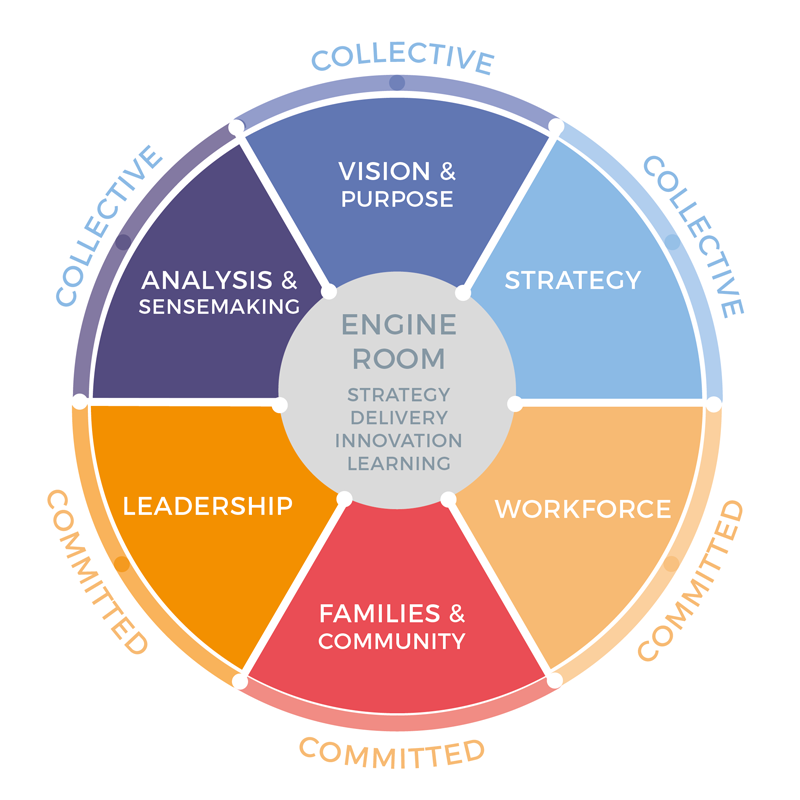
Learn more about building effective systems that enable meaningful change with our Building Systems for Early Childhood Development Report written by Clare Law, Director of Better Start, and Chris Cuthbert of the Thomas Coram Research Unit, Social Research Institute, University College London.
Browse our reports below using the key development and implementation areas that make up our framework.
Collective Vision and Purpose
Creating a shared vision with professionals and communities builds trust, ownership and focus. It provides a clear direction for improving outcomes for babies, young children and families, helping ensure services and decisions support long lasting generational change.
This vision and purpose will drive and keep on track the goal of creating stronger systems, any decision on services impacting on early years families across the system should link back to this vision.
Defining a collective strategy: Model of Change
Blackpool Better Start Model of Change outlines a partnership approach to improving outcomes for children from pregnancy to school age by focusing on two key priorities: building parents’ capabilities and reducing the pressures families face.
Investing in Early Years Literacy
Blackpool research suggests investing in libraries and community-based literacy activities such as sharing stories, songs and rhymes can support children’s speech language and communication development.
Collective Analysis and Sensemaking
A shared understanding of system strengths and challenges helps all stakeholders build a common vision and develop meaningful strategies for action. Using outcomes data alongside insights from practitioners and families is essential to identify barriers and improve outcomes for babies and young children.
Data-informed decision making and ongoing monitoring help maintain focus on priorities throughout implementation. By collectively reviewing what works well, addressing emerging challenges, and identifying gaps in provision, partners can drive meaningful change and support the transformation of local systems.
Data informed decision making in Early Years Systems
Blackpool Better Start uses evidence, data and community insight to inform decisions, improve early years services and ensure resources are targeted where they will have the greatest impact for children and families.
Good practice guide: Evaluation of parent-infant services
The Measuring What Matters report explores how parent-infant relationship services assess their impact and highlights the challenges of measuring complex relationships and infant mental health. It recommends clearer, more meaningful evaluation methods that combine observation, collaboration and long-term measurement to better capture outcomes for families.
Service transformation: Enhanced Health Visiting Service
Blackpool transformed its Health Visiting Service by introducing an Enhanced Health Visiting Pathway with eight universal contacts, improved workforce training, and stronger early intervention support, helping to improve outcomes for children and families through earlier identification of need and more consistent support.
Individualised targeted support: Early Parenthood Service
Blackpool’s Early Parenthood Service was created to provide targeted support for vulnerable parents from pregnancy until four months after birth. Developed with input from local partners and families, it offers specialist nursing support to improve parenting confidence, wellbeing, and outcomes for children.
Community-led consultation and co-production
Better Start’s community consultation project engaged 427 parents, carers and grandparents to identify what matters most for early child development. Using a photo-grid tool, the consultations helped shape local early years services, strengthen community voice, and provide insights into parental priorities, confidence and support needs.
Learning from Parent-Infant Relationship Services
The Measuring What Matters report explores how parent-infant relationship and infant mental health services across the UK assess their impact, finding that no single measure fully captures the complexity of parent-infant relationships and that services often rely on imperfect proxy measures.
Collective Strategy
Strategy development is key to building stronger systems by bringing together communities, professionals and evidence to deliver a shared vision.
Blackpool Better Start is guided by a simple Model of Change focused on two priorities: strengthening parents’ capabilities and reducing family pressures. This model shapes a pathway of support ranging from universal services and early help to targeted specialist support, ensuring families receive the right level of support when they need it. Through a progressive universalism approach, strong universal provision is complemented by evidence-based targeted services for families with additional needs.
Accessible green spaces: Early Years Park Rangers
The Early Years Park Rangers programme helped Blackpool families enjoy parks and beaches through outdoor play and learning, supporting children’s development, wellbeing and connection with nature. Since 2016, it has delivered over 1,400 sessions for around 9,500 young children and their families.
Working together to support ‘School Readiness’
Better Start’s Ready Steady School programme takes a whole-system approach to improving school readiness by supporting children, families, communities and schools. Through shared priorities, resources and community sessions, the programme helps parents and practitioners work together to build children’s skills, confidence and readiness for starting school.
Whole system approach to improving infant feeding
A whole-system infant feeding strategy was introduced in Blackpool to provide families with consistent, evidence-based support from pregnancy through early childhood. By bringing together health professionals, peer support and community services, the programme has helped improve breastfeeding rates, reduce early introduction of solid foods, and strengthen support for parents regardless of their feeding choices.
Committed Leadership
Building strong early years systems required visible, committed and determined leadership. Developing a shared vision and purpose which is communicated from senior leaders through organisations gives a powerful signal that babies and childhoods matter and drives forward a commitment to be brave and shift culture and behaviour towards integrated, place-based, family focused ways of working.
Strong multi-agency governance structures which hold this vision and decision-making ensures that partners are accountable. Through strong governance there is the potential to be innovative in system transformation, bringing together both decision makers and budget holders to collectively bring about change.
Establishing a Good Governance Structure
Better Start established a governance structure that brings together leaders, professionals and parents to guide decision-making and improve outcomes for children and families. The approach promotes transparency, accountability and partnership working, ensuring services and resources are aligned around a shared vision.
Making change through co-production
Better Start’s co-production approach brings families and professionals together to shape services and decisions. By placing lived experience at the heart of decision-making, it helps create more responsive services and better outcomes for children and families.
Born into Care: co-designed mapping of pre-birth pathways
The Born into Care – The Map project brought together professionals and people with lived experience to create a visual guide that helps families understand the complex pre-birth social care and care proceedings process. Through co-design, the project developed an accessible, trauma-informed resource that supports parents and practitioners to navigate difficult decisions, improve understanding, and promote more compassionate support for families at risk of having a baby taken into care.
Developing a Speech, Language and Communication Triage Panel
Blackpool’s Speech, Language and Communication Triage Panel brings together professionals from health, education and community services to ensure children receive the right support at the right time. Since 2020, it has helped over 5,400 children access tailored speech and language support through a collaborative, family-centred approach.
Committed Families and Communities
Family involvement underpins system building at three main levels. First and most fundamentally, empowering parents and fostering social support networks creates strength and resilience and is therefore at the heart of our preventative approach.
Secondly, parental engagement is essential for service improvement and reducing inequalities.Ensuring meaningful involvement of families through inclusion of lived experience, in consultation, co-design and co-productive process increases acceptability, take-up, and the likelihood of effectiveness.
Thirdly, active inclusion of local families and community members in shaping local vision and strategy and developing committed local champions is likely to ensure sustainability of new approaches and systems.
Community Connectors: bridging the gap
The Community Connector programme uses trained local parents to bridge the gap between families and services, providing trusted peer support, child development advice and connections to local services. The programme has helped increase engagement with early years support, improve health literacy and ensure families access the right support at the right time, with over 21,000 family contacts since its launch.
Increasing uptake of the Healthy Start Scheme
Blackpool increased uptake of the Healthy Start Scheme by combining awareness campaigns with practical peer-to-peer support for families struggling to access benefits. Through Community Connectors and a dedicated Money Saving Connector role, the programme helped families overcome application barriers, increasing scheme uptake from 63% to 76% between 2022 and 2024 and ensuring more families received financial support for healthy food and infant nutrition.
Design of oral health programmes for 0-4s
The Oral Health programme brings together health, community and early years partners to tackle oral health inequalities and improve access to dental care for young children in in Blackpool. Through consistent oral health messaging, supervised toothbrushing, distribution of dental care supplies and innovative dental access pathways, the programme has helped reduce rates of tooth decay, increase preventative dental visits and support healthier oral health habits for families.
Community Budgeting Approaches with Early Years Parents
The Community Budgeting approach gives families a direct role in deciding how local funding is spent on activities and services. The programme has increased community engagement, supported family-led projects and strengthened participation in early years services through shared decision-making.
Understanding and shaping paid peer support for your community
Over the last 12 years, Better Start has developed and refined their Community Connector model. Paid peer support designed to bridge the gap between services and communities. Implementing a Community Connector model requires careful consideration of the needs, strengths and priorities of your community.
Supporting Early Years Families with the Cost of Living
The cost-of-living support programme implemented in Blackpool by Better Start helps families access financial assistance, benefits and local services through practical, community-based support. By working with families and partners, the programme reduces barriers to support and helps ensure families receive the right help when they need it most.
Committed Workforce
The early years workforce is diverse and works across public, voluntary and private sectors. Engaging the whole workforce in a shared vision requires a strategic approach to consistently promote understanding of the first 1001 days, child development, and the effects of early childhood adversity.
Building this shared knowledge and vision gives practitioners a collective purpose, strengthens cross-professional support, and reduces silo working. Involving staff in the design or delivery of services further increases commitment, as they feel ownership of both the service and the outcomes for families.
Creating inclusive early years support for every dad in Blackpool
Fathers’ Inclusive Practice Group works to ensure dads in Blackpool are actively included in early years services and support. Through workforce training and father-friendly approaches, the programme has increased fathers’ participation in services and promoted greater recognition of their role in children’s development.
Guidelines for becoming a trauma-informed school
The Trauma-Informed School Guide helps schools understand the impact of trauma on children and provides practical steps to create safe, supportive and inclusive learning environments. It promotes a whole-school approach that supports pupil wellbeing, strengthens relationships and helps children affected by adversity to thrive.
Strategies to support Early Years communication
The Super Six strategies is a set of six simple, evidence-based strategies developed by Better Start to help parents and professionals support children’s speech, language and communication development. By promoting consistent messages across services, it helps families build communication skills through everyday interactions.
Capturing the Voice of the Baby – Co-creating the Think Baby Toolkit
The Think Baby project developed a practical toolkit to help practitioners recognise and respond to babies’ experiences and keep infant voices at the centre of everyday practice. Built with input from practitioners and experts, it promotes simple, reflective approaches that strengthen infant-focused support across early years services.